
Five Year Achievement
As Zain’s five-year Corporate Sustainability (CS) strategy (2020–2025) ends, 2025 represents an important inflection point to reflect on progress made and the way forward. Building on the mission to provide Meaningful Connectivity and the vision to create equitable systemic change, Zain will revamp its sustainability strategy to incorporate key learnings, evolving context, deficits, and challenges of its markets, and align to the direction set by the new ‘4WARD-Progress with Purpose’ corporate strategy. The following section captures the five-year achievements, challenges, and outcomes of each strategic pillar, ensuring that future efforts continue to create long-term value for the business, society, and the environment.
Mission
To provide Meaningful Connectivity leading to equitable systemic change and empower Zain’s communities.
Vision
Safeguard the planet
Address societal challenges through the core business
Enable an inclusive digital society
Build the youth of the future
Strategic Pillars
Climate Change
Decarbonize our business & transition towards net-zero by 2050
Operating Responsibly
Embed ESG across our value chain
Inclusion
Reduce the digital inequality gap
Generation Youth
Build resilience across our communities by targeting 16 million children and youth
Over the past Five years...
2020
- Launched 2020-2025 Sustainability strategy
- Establishment of the Climate Action Committee
- Signatory to the GSMA’s Principle for Driving the Digital Inclusion of Persons with Disabilities
- Launched three-year group wide partnership with UNICEF
- Formulated Women in Tech program group-wide
- Added SASB Framework to Sustainability Report
2021
-
Launched the Internet Monsters online safety awareness campaign for children
-
Published its Supplier Code of Conduct
-
Developed a Human Rights Policy statement
-
Zain started to measure its water consumption across its operations
2022
-
Became member of the UN Global Compact
-
Set CO2 emissions reductions targets from 2022 to 2027 including related financial KPIs
-
Committed to the Science Based Targets Initiative (SBTi)
-
Zain launched a three-year partnership with Child Helpline International
2023
-
Scaled implementation of blocking mechanisms of child sexual abuse material across six operations
-
Published its Waste Management Policy
-
Launched Zain’s Thought Leadership Human Rights Report
2024
-
First company in the region to conduct reasonable assurance on scope 1 and 2 emissions and continue limited assurance on remaining indicators
-
Launched the Zain Group Waste Management Compliance Framework
-
Conducted awareness sessions on the Integrated Thinkings Principles
-
Launched the Responsible Marketing & Communications Standards and Policy Statement
2025
-
Integrated the ESG data management platform to centralize and automate data collection of more than 200 indicators
-
Publish transitionary aspects embedding integrated thinking principles into Zain’s Sustainability Report
-
Published Zain’s Climate Transition Plan
Climate Change
Zain operates across diverse markets in the Middle East and Africa, which are increasingly vulnerable to the impacts of climate change, including rising temperatures, prolonged heatwaves, water scarcity, severe flooding, and unstable energy infrastructure. These conditions place additional strain on network performance, energy consumption, and business continuity, particularly in markets that rely heavily on fossil fuels and face limited access to the grid and renewable energy sources. The rapid growth of data usage, network expansion, and the rollout of energy-intensive technologies such as 5G and data centers further amplify the company’s environmental impact. Managing these challenges requires balancing connectivity growth with decarbonization, addressing both physical and transition risks, and ensuring that climate considerations are embedded into business strategy, governance, and risk management processes.
2020
-
Reduced CO2 emissions by 10% per terabyte of data traffic, reflecting improved energy efficiency across network operations.
-
Deployed over 1,000 solar-powered base stations in Jordan, Sudan, and South Sudan, reducing reliance on diesel generators.
-
Achieved 14% energy savings across data centers and network sites through modernization and optimization initiatives.
2021
-
Upgraded to an A- rating by the CDP in the Climate Change category, positioning Zain as the highest-ranked telecom operator in the MENA region.
-
Set a near-term target to reduce absolute Scope 1 and Scope 2 GHG emissions by 42% between 2020 and 2030, aligning with SBTi pathways.
2022
-
Launched a Group-wide Climate Change Compliance Framework, endorsed by the Board, outlining clear responsibilities and actions toward achieving Net Zero by 2050.
-
Installed solar hybrid systems across more than 400 network sites in Jordan, Sudan, and Iraq, reducing diesel generator dependence and cutting annual CO2 emissions by over 3,000 tons.
-
Implemented 57 energy-efficiency initiatives, including the deployment of hybrid and solar-powered base stations, resulting in measurable reductions in fuel consumption and operational emissions.
2023
-
Deployed 338 hybrid energy solutions across the Group’s network sites, reducing dependence on diesel-only generation.
-
Migrated 55 sites in South Sudan from diesel-generated battery hybrids to solar-powered systems, enhancing clean-energy usage in a high-impact footprint.
-
Committed to aligning with the Science Based Targets initiative (SBTi) strengthening the company’s roadmap towards Net Zero by 2050 and halving emissions by 2030.
2024
-
Deployed 242 solar solutions and 96 hybrid battery systems; connected 123 sites to the grid; and invested over USD 4 million in these initiatives, helping reduce emissions and operational costs.
-
Reduced diesel fuel consumption by approximately 7.5% year-on-year across operations, lowering both fuel costs and CO2 emissions.
-
Delivered operating expenditure savings of approximately USD 11.4 million for 2024 by shifting to energy-efficient and low-emission solutions in key markets such as Iraq, Sudan, and South Sudan.
Operating Responsibly
Operating across eight diverse markets where varying regulatory frameworks, supplier maturity levels, and governance standards represents an ongoing challenge to maintaining responsible and ethical business operations. The company must balance rapid digital growth with the need to ensure consistent application of environmental, social, and governance (ESG) principles across its value chain—particularly in supply-chain management. Limited regional oversight frameworks, evolving compliance expectations, and increasing cyber and data security risks further underscore the importance of strong governance, transparency, and integrity. Upholding stakeholder trust requires continuous supplier engagement, capacity building, and close coordination between Group and local teams to embed ethical conduct principles, ensure responsible sourcing, and align with international sustainability standards.
2020
-
Rolled out the Supplier Self-Assessment Questionnaire (SAQ) to 349 suppliers across Group and local operations, achieving 156 completed responses, which were reviewed and audited by Zain’s Corporate Sustainability team to evaluate social and environmental performance.
2021
-
Delivered ethics and anti-corruption training to over 6,000 employees, achieving full participation from senior management and risk-exposed functions such as procurement and sales.
-
Integrated human rights, labor, and environmental clauses into 100% of new supplier contracts, reinforcing Zain’s governance framework and supplier accountability across its markets.
2022
-
Reached 504 suppliers across all markets through the supplier self-assessment questionnaire, strengthening visibility into supplier practices and identifying areas for improvement in environmental, labor, and governance standards.
-
Carried out on-site physical audits for 14 high-risk suppliers, verifying labor conditions, occupational health and safety measures, and human rights compliance as part of the enhanced due diligence process.
-
Delivered supplier training to 134 vendors through Zain’s first digital Supplier Code of Conduct and Human Rights video, expanding awareness and capacity-building efforts on responsible sourcing and ethical business practices.
2023
-
Launched the second supplier training video on human rights and ethical labor practices, reaching 182 suppliers, marking a 45% increase compared to 2022.
-
Advanced data privacy awareness by introducing targeted training programs across operations—for example, in Saudi Arabia, 3,093 participants (subsidiaries, vendors and partners) completed the ‘Be aware – Be secure’ cybersecurity awareness session.
2024
-
Achieved 100% compliance with the Group’s Code of Conduct training across all operations, reinforcing ethical business behavior and accountability.
-
Enhanced data privacy and cybersecurity governance, including updated policies, incident-response procedures, and employee awareness programs across eight markets.
-
Expanded supplier sustainability assessments to cover 78% of active suppliers, evaluating their performance across environmental, labor, and human rights criteria to ensure responsible sourcing and strengthen value chain resilience.
Inclusion
In the region, digital inequality continues to affect vulnerable groups — including women, youth, persons with disabilities, the elderly, and underserved communities. Despite progress in expanding connectivity, significant barriers persist such as affordability constraints, low digital literacy, limited accessibility standards, access to connectivity and varying cultural and regulatory contexts across markets. Ensuring equitable participation in the digital economy requires Zain to embed inclusion into its products, services, and workplace culture through sustained investment, harmonized strategies, and collaboration with local stakeholders. The company continues to focus on integrating accessibility, gender equity, and diversity across its operations, workforce, and community programs to ensure that no one is left behind.
2020
-
Launched the ‘WE ABLE’ disability inclusion initiative across Zain’s footprint, laying the groundwork for full-time employees with disabilities and accessible workplace practices.
-
Embedded inclusion metrics and targets into the Corporate Sustainability Strategy, setting baseline measures for gender-parity and digital-inclusion efforts across markets.
2021
-
Launched the ‘Women in Technology – Bridging the Gender Gap in STEM’ initiative and produced a report to support female participation in tech fields that was created by women in the STEM field through surveys and focus groups with target audiences.
-
Promoted disability inclusion across operations by joining the global #PurpleLightUp movement and enhancing accessibility through initiatives such as accessible branches in Bahrain, priority service cards in Iraq, and sign-language training for over 130 employees across multiple markets.
2022
-
Transitioned the most material marketing and communications in its operating markets toward being disability-inclusive, aiming for full compliance by 2023 (including closed captions, alt-text, accessible visuals).
-
Launched inclusive products and services, including the ‘Natawasel’ sign-language video call center for deaf and hard-of-hearing patients in Bahrain, which now connects 27 health centers and has logged more than 500 calls and trained 318 employees in sign-language, awareness, and inclusive customer service in 2022.
-
Expanded the ‘Women in Tech’ program, targeting female STEM students (with a goal of 100 mentees per market).
2023
-
Trained 88 employees in sign language as part of the ‘WE ABLE’ disability-inclusion program to strengthen communication with customers and colleagues with hearing impairments.
-
Employed 70 persons with disabilities across operations and achieved 100% completion of inclusive-hiring training for HR employees to promote equitable recruitment and workplace accessibility.
2024
-
Reached 550 elderly participants through a dedicated digital skills training program (372 volunteer hours) in Saudi Arabia, as part of the target to address 260,000 elder people by 2025.
-
Launched the fourth round of the ‘Women in Tech’ (WiT) program, training 485 women across Kuwait, Bahrain, Iraq, Jordan, and Saudi Arabia.
-
Trained 161 female university students in Iraq on data privacy and online safety awareness, under the Inclusion pillar’s ‘Data Privacy’ target for marginalized groups
Generation Youth
Zain operates across the Middle East and Africa, where young people continue to face significant challenges such as high unemployment, limited access to quality education, low digital literacy, and unequal access to connectivity and opportunities. The company recognizes that empowering youth is vital for regional progress and is committed to equipping them with future-ready skills while ensuring their wellbeing and safety online. Across its markets, Zain addresses digital-age risks including exposure to harmful content, cyberbullying, and misinformation, while striving to create safe, inclusive, and accessible digital environments. Delivering these outcomes remains challenging due to diverse socio-economic conditions, varying educational systems, and cultural and regulatory differences across its footprint. To overcome these obstacles, Zain focuses on multi-stakeholder collaboration, localized education initiatives, and scalable digital skills and employability programs that enable young people to participate meaningfully in the digital economy and build resilient futures.
2020
-
Successfully launched the ‘Zain Youth (ZY) Lab’ – an innovation-hub initiative engaging 2,150 youth across five markets in digital skills competitions and mentorship programs.
-
Partnered with educational institutions to deliver 320 hours of coding and digital literacy training to 1,040 secondary school students, supporting future employability.
-
Developed an online safety awareness campaign that reached 1.3 million impressions across social media channels and included interactive modules on responsible digital use.
2021
-
Launched the ‘Zain Youth (ZY) Initiative’ as a Group-wide framework for youth empowerment, aligned with the UN’s Sustainable Development Goals, focusing on education, employability, and digital inclusion.
-
Partnered with UNICEF and other child-protection entities to promote digital wellbeing and online safety through awareness campaigns on cyberbullying, screen time balance, and responsible digital behavior.
-
Delivered digital skills and entrepreneurship workshops reaching over 11,000 youth across Zain’s markets, equipping participants with coding, innovation, and employability skills to enhance career readiness.
2022
-
Installed blocking mechanisms for child-sexual-abuse material (CSAM) across its networks via partnerships (e.g., Internet Watch Foundation / Project Arachnid), addressing child online-safety under the Generation Youth pillar.
-
Conducted the ‘Internet Monsters’ awareness campaign, which reached 7.2 million impressions across Zain’s Group-wide communication channels.
-
Through education-support partnerships in Sudan, Zain rehabilitated and renovated a school (North Omdurman) supporting approximately 500 students annually and provided 200 young students with school uniforms, and 195 students with classroom seating.
2023
-
Strengthened child-protection mechanisms through its partnership with Child Helpline International (CHI), expanding helpline reach and building capacity across operations to ensure timely support for children in need.
-
Expanded digital skills and employability programs in Jordan and Iraq, training over 400 youth through initiatives such as Mobile Maintenance Training in Jordan and the Zain Youth Academy in Iraq. Both programs were designed to equip young people with technical and entrepreneurial skills that improve their employability.
2024
-
Launched a regional screen time awareness campaign generating over 43.9 million impressions, with 82% of respondents reporting improved understanding of responsible digital use.
-
Partnered with Saudi Arabia’s Ministry of Education to train 700 teachers, reaching over 28,000 youth through coding and digital skills sessions.
-
Trained 1,256 Sudanese youth through a vocational program focused on technical and digital skills, aimed at enhancing employability and resilience among young people in conflict-affected areas.
Before providing an overview of each pillar of the sustainability strategy, the following table provides an overview of each sustainability pillar’s key risks and opportunities, and their impacts across the integrated reporting capitals.
Material Topic
Climate Change, Biodiversity and Nature Impact, Natural Capital, Waste Management
Sub-Topic
Climate Change
Risk
Physical risks to network and infrastructure from extreme heat, flooding, and water scarcity; increased operational costs from energy price volatility; regulatory and compliance risks linked to evolving climate policies.
Opportunity
Expansion of renewable energy use, energy-efficient networks, green products and customer solutions; enhanced resilience of infrastructure.
Impact on the six integrated thinking capitals
Climate action strengthens natural, intellectual, and social capital by reducing environmental impacts, driving innovation in energy efficiency and renewable solutions, and enhancing community resilience and stakeholder trust. However, the transition requires significant upfront investments in infrastructure and clean technologies, creating short-term pressure on financial capital.
Natural Capital
Intellectual Capital
Social & Relationship Capital
Financial Capital
Material Topic
Supply Chain Management, Socioeconomic Compliance, Customer Privacy and Data Security
Sub-Topic
Operating Responsibly
Risk
Supplier non-compliance with labor, environmental, and ethical standards; exposure to human rights violations; reputational and regulatory risks; supply disruptions due to weak ESG performance.
Opportunity
Strengthening supplier audits and ESG integration; enhancing transparency and traceability; building resilient, responsible supply chains; improved access to sustainable procurement and financing.
Impact on the six integrated thinking capitals
Responsible supply chain practices strengthen social and relationship, human, and manufactured capital by improving labor standards, supplier trust, and operational reliability. However, enhanced compliance requirements and audits may increase short-term procurement and operational costs, placing pressure on financial capital.
Social & Relationship Capital
Human Capital
Manufactured Capital
Financial Capital
Material Topic
Digital Inclusion and Inclusion, Diversity and Equity, Children’s Rights
Sub-Topic
Inclusion
Risk
Digital divide excluding vulnerable groups; inequality in access to services and employment; reputational risks linked to discrimination; regulatory risks related to accessibility and inclusion standards.
Opportunity
Strengthening supplier audits and ESG integration; enhancing transparency and traceability; building resilient, responsible supply chains; improved access to sustainable procurement and financing.
Impact on the six integrated thinking capitals
Expanding inclusive digital services; empowering women, persons with disabilities, and underserved communities; strengthening workforce diversity; enhancing brand trust and market reach.
Human Capital
Social & Relationship Capital
Financial Capital
Material Topic
Digital Inclusion and Entrepreneurs and SME Development
Sub-Topic
Generation Youth
Risk
Youth unemployment, skills mismatches, and limited access to digital tools; reduced long-term talent pipeline; socioeconomic instability affecting market growth.
Opportunity
Developing future-ready digital and entrepreneurial skills; supporting startups and SMEs; driving innovation, job creation, and digital economy growth; building future customer and talent pipelines.
Impact on the six integrated thinking capitals
Youth and SME empowerment strengthens intellectual, human, and social and relationship capital by building skills, innovation capacity, and economic participation. However, program funding and capacity-building investments create short-term pressure on financial capital.
Intellectual Capital
Human Capital
Social & Relationship Capital
Financial Capital
Climate Change
The challenges posed by climate change in the Middle East and North Africa (MENA) have intensified in recent years, as rising temperatures, severe weather events, water scarcity, and ecosystem degradation continue to affect communities and economies. Addressing these impacts in the MENA region requires an approach that integrates resource management, resilient infrastructure, stronger governance, and multi-stakeholder collaboration, particularly in a context where climate vulnerability remains at an all-time high.
In 2025, Zain continued advancing its climate action agenda as part of its Corporate Sustainability strategy, building on the momentum established over the past five-year cycle. The company sustained progress towards its verified Science Based Targets initiative (SBTi)-approved net-zero goals by expanding renewable energy solutions , implementing further energy-efficiency measures across facilities, and deepening water-risk assessments to strengthen water security across its operations. Efforts to integrate nature and biodiversity considerations into planning and project development also continued, alongside enhancements to waste and water management practices across all markets. A significant development in 2025 was the launch of Zain’s Climate Transition Plan, which outlines a practical, phased roadmap for achieving net zero in alignment with global standards and operational realities.
As transparency is central to Zain’s reporting, the company maintained its annual CDP disclosure and increased the scope of its CO2 emissions reporting by implementing reasonable assurance for Scope 1, Scope 2, and Scope 3 emissions, demonstrating its commitment to high-quality, credible, and accountable climate data, making it first in the region in doing so.

Network and Energy Consumption Transition
Strategic Approach and Communications
Waste Management and Circular Economy
1. Network and Energy Consumption transition
The company adheres to the Greenhouse Gas (GHG) Protocol in the development and management of its emissions inventory, ensuring consistency with globally recognized accounting and reporting standards. The Group’s emissions reduction pathway established in alignment with the Science Based Targets initiative (SBTi) recommendations, providing a scientifically grounded framework for setting decarbonization targets supporting the transition to a low-carbon future. This approach reinforces Zain’s commitment to transparency, accountability, and climate-aligned operational excellence across all Opcos. The emissions reductions reported are in absolute value:
- An annual emissions reduction of no less than 4.2% is required.
- 10 years for near-term target of 42% reduction of scopes 1 and 2 by 2030, and a long-term and Net- Zero target by 2050.
- The emissions inventory encompasses all relevant greenhouse gases, including CO2, CH4, N2O, and HFCs.
- The primary mitigation strategy centers on the deployment of renewable energy solutions, serving as a key driver for reducing operational emissions and advancing the Group’s long-term decarbonization objectives.
- Carbon capture and storage (CCS) solutions will be employed as a complementary measure to address and mitigate residual emissions that cannot be eliminated through conventional reduction strategies.
Boundary:
Zain Group includes all operating companies, subsidiaries, and companies under management control within the organizational boundary of its greenhouse gas emissions inventory, ensuring comprehensive and consistent reporting across the entire Group. Within this boundary, emissions associated with tower operations specifically those resulting from the energy consumption of active network equipment are fully accounted for. This applies irrespective of whether the infrastructure is managed through Zain’s majority owned TASC Tower entity or through individual operating companies. As such, all tower-related emissions are recognized as the responsibility of Zain Group and are incorporated into the consolidated emissions boundary in accordance with established reporting standards.
Emissions Baseline:
Zain Group initially adopted 2022 as the baseline year for establishing its emissions reduction targets. However, following the Science Based Targets initiative’s (SBTi) approval of the Group’s science-based targets, the baseline was revised to 2020 to align with SBTi guidance and the broader ICT sectoral decarbonization pathway. This adjustment ensures methodological consistency and strengthens the scientific integrity of Zain’s reduction trajectory.
Emissions reductions:
Reductions in CO2 emissions are calculated based on the type and scale of energy-efficient solutions planned for deployment within each operating entity. These estimates consider the anticipated impact of network growth, including the rollout of new sites and expansions of existing infrastructure. The resulting net emissions reduction is therefore determined by balancing the abatement achieved through efficiency initiatives against the additional emissions generated by network expansion activities.
Targets calculations:
The aggregated net emissions reductions across all operating entities are compared against the established baseline to determine the Group’s overall CO2 emissions reduction target.
Zain’s Target:
Zain Group’s emissions reduction targets have been formally validated and approved by the Science Based Targets initiative (SBTi) and are articulated as follows:
- Overall Net-Zero Target: Zain commits to reach net-zero greenhouse gas emissions across the value chain by 2050..
- Near-Term Targets: Zain commits to reduce absolute Scope 1 and 2 GHG emissions by 42% by 2030 from a base year of 2020.
- Long-Term Target: Zain commits to reduce absolute Scope 1 and 2 GHG emissions by 90% by 2050 from a base year of 2020.
- Zain also commits to reduce absolute Scope 3 GHG emissions by 90% within the same timeframe.
2020 – 2050 CO2 Emissions targets for Scope 1 and Scope 2:
Target |
Scopes / Targets |
2020 |
2030 |
2050 |
|---|---|---|---|---|
| Absolute / 1.5°C | Scope 1 emissions (t CO2e) | 401,370.94 | 232,795.14 | 52,178.22 |
| Scope 2 emissions (t CO2e) | 730,328.98 | 423,590.81 | 94,942.77 | |
| Scope 1 + Scope 2 emissions (t CO2e) | 1,131,699.92 | 656,385.96 | 113,169.99 | |
| Reduction Targets | 42.0% | 90.0% |
CO2 Emissions Reduction (2020-2025)
Scopes |
Base Year (2020) |
Reporting Year (2025) |
Reduction to Date |
% near-term SBT Progress |
|---|---|---|---|---|
| Scope 1 emissions (tCO2e) | 401,370.94 | 358,605.16 | 52,823.78 | 30.56% |
| Scope 2 emissions (tCO2e) | 730,328.98 | 683,974.678 | 80,943.30 | 25.19% |
| Scope 1 & 2 emissions (tCO2e) | 1,131,699.92 | 1,042,579.84 | 133,764.28 | 27% |
Bahrain
Zain Bahrain delivered a significant reduction in emissions, exceeding its annual reduction target by 21.85%, reflecting strong execution across key operational levers. This performance was primarily driven by the sharing of 36 sites with other mobile network operators (MNOs), in addition to the successful connection of 15 sites to the national grid, enhancing overall energy efficiency and reducing reliance on higher-emission power sources.
Furthermore, Zain Bahrain progressed its network optimization efforts by transitioning 140 indoor sites to outdoor configurations, resulting in an additional annual emissions reduction of 6.84%. This initiative contributed to lowering energy consumption, particularly by reducing cooling requirements, and improving overall network efficiency.
Iraq
Zain Iraq exceeded its 2025 annual emissions reduction target by 23.47%, demonstrating strong operational execution and a targeted approach to addressing structural network challenges. This performance was underpinned by strategic interventions to resolve longstanding issues related to aging infrastructure and suboptimal maintenance practices, which had historically contributed to elevated emissions and service inefficiencies.
In partnership with TASC Towers, Zain Iraq implemented 590 battery hybrid solutions, complemented by the deployment of 144 solar–diesel hybrid systems. These initiatives significantly enhanced energy efficiency, reduced reliance on diesel generation, and improved network reliability. Collectively, these measures delivered a 30.05% reduction in CO2 emissions, positioning Zain Iraq as a strong performer in advancing its decarbonization objectives.
Jordan
In 2025, Zain Jordan continued to realize the benefits of the grid decarbonization initiatives implemented in 2023, with over 86.38% of its electricity consumption sourced from renewable energy under the green allocation agreement with the local government. This transition has materially strengthened the company’s emissions profile and reduced its reliance on conventional energy sources.
In parallel, and in collaboration with TASC Towers, Zain Jordan has further advanced power optimization across its 2G, 3G, 4G, and 5G networks, enhancing overall energy efficiency across its mobile infrastructure. These efforts reflect a continued focus on operational efficiency and sustainable network performance.
Kuwait
In 2025, Zain Kuwait, in collaboration with IHS Towers, successfully implemented a series of strategic climate mitigation and energy efficiency initiatives. These included the transfer of 11 sites to the commercial grid, the installation of 121 high-efficiency DC power systems, the deployment of 88 inverter-based air-conditioning units, and the rollout of 70 advanced battery systems. Collectively, these measures enhanced network resilience, reduced energy consumption, and supported Zain Kuwait’s long-term sustainability objectives.
However, Zain Kuwait failed to reach its target of maintaining an increase in emissions of 17.72% due to the deployment of a new network layer to its 5G infrastructure. Furthermore, Zain Kuwait operates in one of the world’s hottest climates and faces the risk of a substantial increase in energy consumption and CO2 emissions should temperature rise continues. Despite these challenges, the organization remains firmly committed to proactively engaging its key stakeholders. Zain Kuwait is actively initiating dialogue and advocating for regulatory reforms with the local government to accelerate the large-scale deployment of renewable energy solutions. In parallel, the company is exploring strategic opportunities to position itself to benefit from the national transition toward renewable energy in the future.
Saudi Arabia
Zain KSA maintained its emission levels despite encountering several challenges in advancing its climate change mitigation plans, largely due to its reliance on on-grid electricity generated predominantly from conventional fuel and gas sources. This dependence presents a significant barrier to achieving a Net-Zero transition.
In collaboration with Latis, Zain KSA executed several targeted initiatives, including the transfer of 262 sites to the commercial power grid, the deployment of 244 battery-hybrid solutions, and the implementation of 6 solar-hybrid systems. For sites not transitioned under the Latis model, Zain KSA is progressing plans to replace existing shelters with energy-efficient outdoor cabinets, further enhancing energy performance and reducing emissions intensity.
Additionally, the Kingdom’s increasingly extreme summer temperatures have contributed to elevated energy demand and associated CO2 emissions, reinforcing the need for more sustainable and resilient energy solutions. Addressing these structural and environmental challenges will be critical in positioning Zain KSA toward a more efficient, climate-responsible, and future-ready operating model.
Sudan
In 2025, amid the ongoing conflict in Sudan, the national electricity network continued to experience severe disruption due to extensive infrastructure damage and persistent service instability. The country’s power supply remained heavily reliant on natural gas, oil, and diesel generation, further constraining energy reliability. Zain Sudan faced significant operational challenges, particularly in the Western region, which was among the most adversely affected. As a result of these combined factors, Zain Sudan was unable to achieve its reduction targets.
In response, and to enhance power stability and operational resilience, Zain Sudan implemented targeted mitigation measures, including the connection of 23 sites to the commercial grid and the deployment of 1 solar–diesel hybrid system. These initiatives were critical in improving energy reliability and optimizing consumption across the mobile network, despite the highly constrained operating environment.
South Sudan
Zain South Sudan continued to face significant climate-related challenges throughout 2025, with severe flooding and prolonged heavy rainfall impacting large portions of its network infrastructure. Despite these adverse conditions, the company undertook targeted interventions to mitigate environmental impacts and strengthen energy resilience.
These efforts included the transition of 19 sites to the commercial grid and the deployment of 7 solar systems across diesel-generator hybrid sites. Collectively, these initiatives enhanced network reliability, optimized energy consumption, and supported more sustainable and resilient power operations across the network.
Throughout 2025, Zain achieved 87% of its year-to-date target (-11% versus a target of -13.07%), reflecting continued progress in the deployment of energy-efficient solutions across its operating companies. This performance underscores the Group’s sustained commitment to operational resilience, cost optimization, and carbon reduction.
These efforts comprised a portfolio of market-specific initiatives, including the deployment of hybrid power systems, expansion of grid connectivity, enhancement of battery technologies, and the integration of renewable energy solutions. Collectively, these measures strengthened network stability, reduced reliance on diesel generation, and delivered measurable progress toward Zain’s long-term sustainability and emissions reduction objectives.
Hybrid Solutions Installations
Operating Countries |
DG-Battery Hybrid solution |
Solar Hybrid solution |
|---|---|---|
| Bahrain | 2 | 0 |
| Iraq | 404 | 144 |
| Kuwait | 1 | 0 |
| Saudi Arabia | 244 | 6 |
| Sudan | 0 | 1 |
| South Sudan | 0 | 7 |
| Total | 809 |
Spending related to CO2 reduction initiatives – 2025
Initiatives |
Total Direct cost (USD) |
Total Indirect cost (USD) |
|---|---|---|
| Zain sharing Others sites | 0 | 184,900 |
| Others sharing Zain sites | 0 | 0 |
| Outdoor (BTS/Power) solution | 765,594 | 765,594 |
| Small shelters (٢ 2.5m x 2.5m) | 0 | 0 |
| DG-Battery Hybrid solution | 2,210,000 | 0 |
| Smaller size Generators | 0 | 61,201 |
| Solar Hybrid solution | 3,775,000 | 0 |
| Grid Connection | 710,812 | 0 |
| Free Cooling system | 0 | 0 |
| Total | 7,461,406 | 1,011,695 |
Improvements to Energy Efficiency and Site Optimization (units)
Operating Countries |
Smaller size Generators |
Outdoor (BTS/Power) solution |
Free Cooling Solutions |
Grid Connection |
Upgrade to more efficient DC Power solution |
|---|---|---|---|---|---|
| Bahrain | 0 | 140 | 0 | 15 | 0 |
| Iraq | 0 | 0 | 0 | 0 | 0 |
| Kuwait | 10 | 0 | 81 | 11 | 121 |
| Saudi Arabia | 0 | 0 | 0 | 262 | 0 |
| Sudan | 0 | 0 | 0 | 23 | 0 |
| South Sudan | 0 | 0 | 0 | 19 | 0 |
| Total | 10 | 140 | 81 | 330 | 121 |
CO2 Emissions – Scope 1 & 2 / Operation (Sites/ Data Centers/HQ)
Descriptions |
Units |
Bahrain |
Iraq |
Jordan |
KSA |
Kuwait |
Sudan |
South Sudan |
|---|---|---|---|---|---|---|---|---|
| Scope1 – Fuel | Liters | 645,834 | 44,070,480 | 212,903 | 45,886,799 | 12,512,142 | 21,801,329 | 3,307,688 |
| Scope 2 – Electricity | KWh | 45,490,920 | 169,812,523 | 146,537,364 | 671,591,855 | 185,346,440 | 18,062,392 | 3,550,594 |
| Scope1 emissions | mTon CO2 | 2,580.144 | 122,450.798 | 1,339.454 | 125,295.386 | 37,983.338 | 60,091.436 | 8,864.604 |
| Scope2 emissions | mTon CO2 | 31,784.506 | 112,585.703 | 7,174.577 | 410,006.827 | 113,913.922 | 5,521.673 | 2,987.470 |
| Total Scope1 & 2 emissions | mTon CO2 | 34,364.650 | 235,036.501 | 8,514.031 | 535,302.214 | 151,897.260 | 65,613.109 | 11,852.074 |
| Baseline-year Decrease / Increase [Year 2020 vs 2025] mTon | -11.37% | |||||||
Driving Operational Efficiency: Our Sites (Tower Sharing Program)
Operating Countries |
Zain Sharing Others’ Sites |
Others Sharing Zain’s Sites |
|---|---|---|
| Bahrain | 36 | 0 |
| Kuwait | 5 | 0 |

Energy consumption and CO2 emissions
Descriptions |
Units |
Total |
|---|---|---|
| Scope1 – Fuel | Liters | 128,437,175 |
| Scope 2 – Electricity | KWh | 1,240,392,088 |
| Scope1 – Fuel | tCO2e | 344,195.088 |
| Scope1 – Refrigerants | tCO2e | 14,409.660 |
| Scope1 emissions | tCO2e | 358,605.160 |
| Scope2 emissions | tCO2e | 683,974.678 |
| Total Scope1 & 2 emissions | tCO2e | 1,042,579.838 |
| Baseline-year 2020 Absolute Decrease/ Increase in Emissions [Year 2020 vs 2025] | % | -11.37% |
Notes:
- For the conversion from liters of fuel to KWh, we considered that 1 liter = 3KWh on the basis that 1 liter produces 10KWH with diesel generator efficiency of 30% as recommended by the GSMA
- DG-battery hybrid solutions usually lead to approximately 50% savings on fuel consumption
- Estimate of KWh for solar system is based on the data provided by Zain Jordan as per site monitoring and management solution. 750KWh is produced per site on average.
Scope 3 Emissions:
Category name |
Total tCO2e |
|---|---|
| Category 1: Purchased goods and services | 129,765.35 |
| Category 2: Capital goods | 121,439.17 |
| Category 3: Fuel- and energy-related activities (not included in scope 1 or scope 2) | 131,336.39 |
| Category 4: Upstream transportation and distribution | 556.76 |
| Category 5: Waste generated in operations | 11,083.59 |
| Category 6: Business travel | 1,182.20 |
| Category 7: Employee commuting | 11,390.58 |
| Category 8: Upstream leased assets | 87.98 |
| Category 9: Downstream transportation and distribution | 11,122.75 |
| Category 10: Processing of sold products | 0.00 |
| Category 11: Use of sold products | 16,803.95 |
| Category 12: End-of-life treatment of sold products | 10,012.17 |
| Category 13: Downstream leased assets | 11,435.13 |
| Category 14: Franchises | 0.00 |
| Category 15: Investments | 24,187.67 |
| TOTAL Scope 3 Emissions | 480,403.68 |
| Y-O-Y Change (2024-2025) | -20,814.32 (-4.15%) |
2. Strategic Approach & Communications
Climate Change Awareness
The company is dedicated to fighting climate change and using its channels to provide to spread awareness on what our customers can do to address it. To achieve this, Zain set a goal to reach 40% of its customers about climate change by 2025. This commitment aligns with the overall sustainability plan and follows the CDP principles.
Zain continues to launch a variety of campaigns and initiatives across its different markets to position climate change at the forefront and spear dialogue related to climate change and inspire stakeholders to act. To monitor how effective the campaigns are, the organization surveys customers before and after they participate.
Groupwide
This year the company launched a campaign raising awareness on Biodiversity. This campaign centered on the importance of biodiversity and how it is essential to the stability of ecosystems, food systems, and climate resilience. It incorporated regional challenges faced by the loss of biodiversity, with issues such as water scarcity, soil degradation, and desertification.
Through clear educational content, regional storytelling, and locally tailored messages, the campaign demonstrated how the loss of species and habitats disrupts food security, increases climate vulnerability, and weakens natural resilience across all Zain markets. It equipped audiences with practical actions they can take to support conservation efforts, restore local ecosystems, and protect the natural resources their communities depend on.
In 2025, Zain reached over 22 million people through climate and environmental awareness campaigns, addressing key issues including climate emergency response, plastic waste reduction, biodiversity protection, and sustainable consumption across its markets. The table below is a summary of all the campaigns that were conducted in the past 5 years across Zain’s operations.
Opco |
Summary |
Impact |
|---|---|---|
| Groupwide | Zain advanced its regional environmental agenda through climate change awareness, waste reduction, biodiversity protection, and impactful storytelling initiatives, engaging millions across its operations. |
Board climate & biodiversity training (2022) “Shadows of the Past” cits ampaign launched (2024) Biodiversity Campaign launched (2025) Target: 40 % customer engagement by 2025 |
| Bahrain | Drove national progress in e-waste management and afforestation through strategic partnerships and innovative clean-up technologies. |
92,000 people reached (2022) 370 trees planted under “Forever Green” (2022) 13.6 tons of e-waste collected – 100 % recycled (2023) 5.8 tons beach waste removed via solar robot “Bebot” (2023) 47,138 people reached via “Badilna Mannmu” (2024) 100,200 people through 7 campaigns (2025) |
| Iraq | Zain Iraq focused on environmental awareness and carbon offsetting, engaging millions through nationwide campaigns and large-scale tree planting. |
10 M people reached (2022) 1.64 M social media reach (2022) 2,000 palm trees planted (2022), Environmental campaigns reaching 1.1 M (World Environment Day 2023) 850 Acacia trees planted with Hadla Startup (2024) 11.88M people reached through 4 campaigns |
| Jordan | Strengthened national sustainability through innovation, climate education, and real-time water monitoring technologies. |
3.9 M people reached (2022) 2,184 survey participants (2022) First Climate Hackathon launched (2022), 10.3 M reached through campaigns (2023) 13 real-time water monitoring stations installed (2024) 742,301 people reached through 4 campaigns |
| Kuwait | Continued the “Badilha Bil Zain” campaign, driving behavioral change on waste reduction and sustainable consumption. |
Marine waste awareness with Kuwait Dive Team (2022) 50 893 campaign reach (2023) 18,300 campaign reach (2024) |
| Saudi Arabia | Reinforced national reforestation and climate-awareness efforts, aligning with Saudi Vision 2030 and the National Green Initiative. |
2.23 M people reached (2022) 12,000 trees planted with Green Horizon (2022) EV chargers installed at Granada Business Park serving 5,000 users (2022) Reached 365,800 through 2 campaigns in 2025 |
| Sudan | Last progress made 2022: Sudan animal rescue center and public awareness via SMS and Social campaigns to engage communities on climate risks. |
500 seedlings planted & 5,000 L water system donated (2022) 500 volunteers – Port Sudan clean-up (2024) 130 volunteers reached 3,000 people in White Nile State (2024) 9 Million individuals reached through 11 Bulk SMS alerts with DARAJA, providing critical early warning messages about severe weather. |
| South Sudan | Focused on public awareness via SMS and social campaigns to engage communities on environmental protection and plastic waste. |
1.4 M SMS recipients on World Environment Day (2022) 5,620 people engaged via social campaigns (2023) |
ZYxGreenSkills
In 2025, Zain advanced the ZY x Green Skills initiative by strengthening its delivery model and refining its content in response to insights from the 2024 Group-wide survey. Over the year, Zain explored collaboration opportunities with potential partners to support and scale the program across markets. As part of this process, a thorough assessment was carried out to ensure any partnership would meet the required standards of quality, impact, and strategic alignment.
This evaluation period led to a strategic decision to prioritize program refinement over delivery, enabling Zain to revisit the structure of ZY x Green Skills and realign learning pathways with the competencies identified as most critical by youth respondents. The refined content places greater emphasis on green skills where participants previously demonstrated lower familiarity, while continuing to reinforce highly engaged themes such as sustainability, innovation, and environmental responsibility.
Aligned with last year’s feedback, Zain operations continued to conduct workshops and awareness sessions in collaboration with local sustainability-focused businesses and influencers. These engagements highlighted the growing importance of green skills and demonstrated how every role has the potential to evolve into a green job. The program also continued to underscore concepts such as circularity, resource efficiency, and the creation of closed-loop systems that reduce waste and support a regenerative economy.
With this strengthened foundation and clearer program direction, ZY x Green Skills is positioned to resume broader implementation next year through a more targeted, scalable, and impact-driven approach across Zain’s operations further equipping youth with the skills needed to contribute to more sustainable and resilient communities.
Kuwait
80 participants
In 2025, Zain Kuwait delivered a ZY x Green Skills session on resource efficiency tailored to the local context, alongside a session led by an external expert on green innovation in office environments. The sessions responded to survey insights calling for more practical and locally relevant content and engaged 80 participants.
Jordan
143 participants
Zain Jordan continued to advance climate and environmental awareness and green skills development through targeted internal and external engagements. Internally, two awareness sessions were delivered to approximately 23 employees, covering key topics such as CO2 emissions and carbon footprint management, led by the Zain Jordan Climate Change Manager, alongside a session on biodiversity and marine life awareness conducted in collaboration with ProjectSea. Externally, Zain Jordan engaged around 120 students from Yarmouk University through an interactive session focused on circular economy principles and waste management practices, providing practical insights into sustainable resource use and responsible consumption.
Biodiversity
Zain recognizes the essential link between healthy climates and ecosystems and digital connectivity, particularly as our operations span some of the most water-scarce and ecologically stressed regions in the world. Biodiversity conservation and nature preservation remain core components of Zain’s climate action strategy, reflecting the company’s commitment to maintaining ecological balance and supporting thriving biodiversity within the MENA region, where rapid urbanization, habitat degradation, and climate change pose imminent threats. Guided by emerging global nature and biodiversity standards, Zain continues to embed nature considerations into its climate governance and operational planning. This includes integrating biodiversity into the Climate Change Policy, Waste Management Policy, Environmental Standard, Climate Action Transition Plan, Water Management Policy Statement and strengthening environmental due diligence by ensuring biodiversity-related questions into our supply chain management process, reinforcing transparency and accountability across the value chain. As part of internal capacity building, Zain conducted biodiversity and nature-awareness training and continues to raise awareness through internal communications, environmental campaigns, and engagement activities that promote responsible interaction with natural ecosystems.
To safeguard terrestrial ecosystems, Zain applies comprehensive Environmental and Social Management Plans (ESMPs) across site assessment, selection, operation, and maintenance activities. The plan is applicable to all suppliers that are responsible for building Zain’s infrastructure. Before deploying any network infrastructure, detailed environmental assessments are conducted to evaluate potential impacts on natural habitats and surrounding communities. Sites located near or within legally protected areas trigger enhanced engagement with local authorities, area sponsors, and community stakeholders to ensure that appropriate conservation measures are implemented. Biodiversity requirements are also embedded into site selection forms, construction procedures, and routine maintenance protocols to minimize ecological risks throughout the infrastructure lifecycle. In 2025, no biodiversity-related risks or breaches were reported across Zain operations.
Zain continues to acknowledge the potential interactions between subsea cable systems and marine biodiversity. Through Zain Omantel International (ZOI), the company works closely with subsea cable consortia to ensure that all planning, installation, and maintenance activities comply with international marine biodiversity protection standards. Robust Environmental Impact Assessments (EIAs) are conducted to identify sensitive marine and nearshore habitats, mitigate risks, and prevent ecological disruption, such as by avoiding critical habitats, adjusting installation timelines to protect breeding seasons, and minimizing underwater noise impacts. ZOI maintains active engagement with environmental authorities and relevant stakeholders, ensuring continuous oversight and alignment with biodiversity protection objectives. Together, these measures reinforce Zain’s commitment to protecting both terrestrial and marine ecosystems while advancing sustainable digital connectivity across all markets. In 2025, no biodiversity incidents or non-compliance events were recorded across ZOI’s subsea cable operations. In addition, Zain Kuwait continued its 27-year collaboration with the Kuwait Dive Team to protect marine ecosystems. Activities included reef monitoring and large-scale marine waste removal. Coral health monitoring was supported in collaboration with CoralWatch, a global citizen science program run by the University of Queensland. During 2025, 127,000 kg of Marine Waste was removed.
3. Waste Management
In 2023, Zain Group introduced a comprehensive Waste Management Policy aimed at eliminating all forms of waste, including electronic, plastic, wood, and paper waste, by 2030. The policy applies to all Zain operations, subsidiaries, and entities under the Group’s management control. This direction aligns with Zain’s Climate Change Compliance Framework, approved by the Board of Directors, ensuring the structured and consistent implementation of waste reduction initiatives. The approach supports Zain’s broader ambition to achieve net-zero emissions by 2050 and to minimize value chain impacts on communities, ecosystems, and biodiversity. Last year, Zain launched a Board-approved Waste Management Compliance Framework that outlines how the policy needs to implemented where it integrates best-practice waste management requirements into the design, deployment, and operation of its infrastructure. The framework is underpinned by robust internal controls, detailed procedures, and clearly established KPIs to ensure effective oversight and implementation across all operations.
In 2025, Zain initiated a comprehensive data-collection process across all operations to quantify the different types of waste generated within the company. This marks the first step toward establishing a Group-wide waste baseline, which will serve as a foundation for setting measurable reduction and elimination targets.
By mapping waste streams and identifying key sources across facilities and business activities, Zain aims to enhance visibility, improve tracking, and ensure accountability in its waste management performance. The baseline will guide the development of future goals and initiatives aligned with the company’s ambition to eliminate all forms of waste by 2030.
Building on this foundation, the company launched several initiatives to manage and reduce different waste streams across its footprint, reinforcing its commitment to circularity and ecosystem preservation.
Through partnerships and innovation, the company continues to make tangible progress toward its 2030 waste elimination targets.
2025
Implementation of the framework groupwide embedding clearly identified internal control mechanisms to track and monitor waste
2024
Creation of Waste Management Compliance Framework with roles clearly defined and approved by the board
2023
Creation of Waste Management Policy
Waste Reduction Initiatives across Zain’s Operations:
Zain Kuwait - MoU with TadwiRe
In 2025, Zain Kuwait continued to advance its sustainability agenda through a range of waste management initiatives, supported by its ongoing partnership with TadwiRe, Kuwait’s first recycling facility of its kind.
Alongside its established e-waste collection system, the company introduced a new metal waste collection stream to further strengthen responsible disposal practices and broaden its contribution to circular resource management. These efforts reflect Zain Kuwait’s commitment to minimizing environmental impact and enhancing waste segregation across its operations.
Zain Bahrain
Plastic Reduction:
Through a dedicated plastic waste management campaign, Zain Bahrain successfully recycled 331 KG of plastic since the initiative’s inception. What began as a ZAINIAC idea through a plastic recycling competition, the initiative evolved into a structured program led by the Corporate Sustainability team, supported by 14 dedicated collection bins across the premises. Once filled, the bins are transferred to the basement, where a certified recycling partner weighs and processes the collected materials, ensuring responsible disposal and circularity.
Paper Reduction Campaign:
As part of Zain Bahrain’s strategy to eliminate waste across its headquarters, the company instituted a paper-reduction initiative designed to minimize paper consumption and enhance operational efficiency through a structured four-stage process. In 2025, Zain Bahrain continued to advance this program, reinforcing its commitment to digitalization and further embedding paper-efficient practices throughout its operations. The paper reduction campaign brings together cross-department stakeholders, legal and risk teams, and a third-party recycling partner to responsibly clear inherited paper waste by ensuring that all disposed of papers are responsibly audited and recycled. Since inception, over 38,000 kg of paper have been collected, including 100kg in 2025.
Zain Jordan - Refurbished Devices Initiative
Zain Jordan continues to advance its waste management and circular economy efforts through the Refurbished Devices Initiative, which focuses on extending the lifecycle of Home Internet equipment and reducing electronic waste across its operations. The program follows a structured end-to-end process collecting returned devices from shops, transferring them to the central warehouse, restoring them through technical testing and refurbishment, and redistributing them for resale or replacement. To date, the initiative has successfully refurbished 6,670 devices, demonstrated its strong environmental, operational, and financial impact and reinforced Zain Jordan’s commitment to responsible waste management and sustainable business practices.
Water Management:
Each of Zain’s operating markets continues to face distinct climate and water-related weather challenges. In 2025, Zain strengthened its water efforts through the approval and publication of its Water Management Policy Statement approved by the Zain Group Board of Directors. This policy formalizes the company’s commitment to responsible water use across its facilities, infrastructure and value chain, and recognizes the broader regional risks that water scarcity poses, including displacement, food insecurity, and potential conflict. The new policy was followed by the development of a comprehensive Water Management Plan to guide implementation across all operations.
Governance of water-related matters is overseen by the Climate Action Committee which includes members of Executive Management and reports directly to the Board. The Committee is responsible for setting strategic goals and KPIs, establishing baselines for direct and value chain water use, identifying risks and opportunities across short, medium, and long-term horizons, and ensuring that all water management approaches receive appropriate board-level review and approval. This structured and tailored approach enables Zain to develop realistic and site-specific water efficiency targets, including time-bound goals for markets operating under severe water stress.
During the reporting period, Zain conducted detailed assessments to establish accurate water consumption baselines across its markets. Kuwait, Bahrain, Iraq, Jordan, KSA, Oman, and UAE remain classified as extremely highly water stressed according to global indicators such as the World Resources Institute Water stress index, where overall demands exceed the available supply. Sudan, and South Sudan are categorized as moderately or less stress requiring ongoing but flexible conservation measures to ensure responsible water use.
Given the low water intensity of Zain’s operations, which primarily involve office-based activities, large recycling and rainwater harvesting remain impractical in arid markets due to climatic conditions and infrastructure limitations. Instead, Zain continued to strengthen conservation measures that were introduced in previous years. These include the continued use and maintenance of previously deployed solutions across operations, such as smart water faucets, optimization of WC flush systems and the implementation of operational guidelines governing water usage.
Zain continues to align its broader water efforts with international guidance from the UN Convention to Combat Desertification, the World Water Council, the International Drought Resilience Alliance, the United Nations Sustainable Development Goals, the World Meteorological Organization, and the United Nations Environment Program.
To strengthen governance, accountability and the group’s long-term approach to water, the company initiated the process to establish a group wide water baseline basement, aiming to accurately quantify water consumption across all operations, and establish a consistent methodology for data collection, and identify key areas for improvement. The baseline is to be finalized by the end of Q2 2
Bahrain |
Iraq |
Jordan |
Kuwait |
Saudi Arabia |
Sudan |
South Sudan |
|
|---|---|---|---|---|---|---|---|
| Total Water Consumption in m3 in 2025 | 10,743 | 14,045 | 6,547 | 8,488 | 9,486 | N/A | 4,730 |
| Total area of operational Headquarters (m2) | 16,761 | 67,696 | 27,930 | 16,662 | 28,675 | N/A | 8,000 |
| Total Consumption in 2025 (m3) | 54,039 | ||||||
| Y-o-Y Reduction (%) | 11.3% | ||||||
| Y-o-Y Reduction (m3) | 6,879 | ||||||
Operating Responsibly
This strategic pillar is dedicated to integrating Environmental, Social, and Governance (ESG) principles throughout Zain’s value chain. It is anchored around three core priorities:
- Ensuring robust disclosure and transparency in reporting how Zain delivers value in the ESG domain.
- Upholding stringent responsible supply chain management to embed ethical practices, enforce standards, and mitigate risks across the value chain.
- Maintaining a strong commitment to data privacy to protect all stakeholders — particularly vulnerable groups such as the elderly, women, youth, and migrant workers.
Through these efforts, the company aims to strengthen trust, create value, and set a benchmark in ethical business conduct, transparency, and operating beyond regulatory compliance.
Disclosure and Reporting
Zain monitors the progress of the targets set in its sustainability strategy through its business plans, operational reviews, quarterly meetings, and other stakeholder engagement mechanisms.
In 2025, the company migrated its sustainability KPIs onto a sustainability data monitoring cloud solution to help the company, track, manage and report on ESG metrics effectively. To ensure proper integration and enhance the quality of ESG standards, Zain implemented the following measures:
- Aligned and finalized over 200 KPIs across all relevant functions to ensure full adherence to recognized standards.
- Delivered targeted training sessions (both online and offline) to build internal capability and alignment.
- Identified key stakeholders and defined approval hierarchies to establish structured quality control protocols.
- Onboarded all relevant departments and subsidiaries to ensure consistent application across the Group.
- Implemented a controlled data governance process where data inputters submit data, data approvers review and sign off, and any feedback or amendments are fully tracked to maintain audit readiness.
- Established a tiered review flow, whereby data is validated at the operational level, then by the responsible Group function, and finally undergoes a comprehensive review and approval by Group Sustainability to ensure accuracy and consistency.
This year, Zain also reinforced its commitment to transparency by extending reasonable assurance to its Scope 3 emissions, in addition to the continued assurance of Scope 1 and Scope 2 emissions. The assurance letter is available on page 141 of this report.
Responsible Supply Chain
Target for 2025
To ensure all active suppliers complete the self-assessment questionnaire and watch the supplier training video and align to Zain’s policies and material active supplier undergo a physical audit.
Zain’s Response
Zain adopted a robust supply chain management strategy designed to identify and mitigate sustainability risks while ensuring that all suppliers comply with its ESG and supply chain standards. This approach fosters responsible practices across the value chain and helps minimize reputational and human rights risks. In addition, the company prioritizes strengthening its local supply chain to support economic growth and build supplier resilience. By consistently tracking and evaluating its engagement with local suppliers in each market, Zain demonstrated its ongoing commitment to maintaining a stable and sustainable supply chain.
Zain’s supply chain management framework rigorously evaluates suppliers to ensure alignment with its values and standards. Through comprehensive assessments covering ethics, sustainability, and compliance, the company partners with suppliers committed to responsible practices. This proactive approach to safeguard operations strengthens Zain’s dedication to a sustainable, value-driven supply chain.
Zain continued to hold its annual Supply Chain Management Forum for its fifth consecutive year, where the procurement and sustainability teams from each operation gathered to discuss lessons learnt and challenges faced the previous year. The forum emphasized hearing directly from on-ground teams to better understand their interactions with suppliers, streamline processes, and enhance the accuracy of supplier information and assessments. More than 32 participants attended the forum, where discussions focused on 2024 lessons learned, supply chain process documentation, defining active suppliers, commitment to policies, supplier self-assessment questionnaires, physical audits, supplier training, the Waste Management Compliance Framework, and the Data Automation Platform.
This year, Zain enhanced its supply chain management approach based on feedback received during the forum. The supplier self-assessment questionnaire was shortened to make it more efficient while maintaining the same standards, resulting in a higher response rate. The observation form was also clarified and made more stringent, requiring all participants to sign even when no observations were made. A comprehensive Supply Chain Process Document was developed to serve as a reference guide for current and new team members, ensuring consistency and continuity. In addition, procurement teams migrated to a cloud-based platform to input sustainability KPIs, improving data accessibility and automation. The supplier training program, previously centralized at the Group level, was cascaded to each operation, empowering local teams to oversee participation and follow up directly with suppliers who had not completed the training, significantly streamlined the process and improved accountability.
Topics covered in Supplier Self-Assessment Questionnaire include:
- Workforce Profile: Covers employee demographics, including gender representation and inclusion of people with disabilities.
- Environment: Encompasses health and safety practices, employee training, energy use, packaging, waste and raw material management, as well as newly integrated elements such as net-zero targets, biodiversity, and traceability.
- Social: Evaluates adherence to labor and human rights standards, including policies on child labor, fair compensation, and non-discrimination.
- Security: Reviews of how suppliers manage external security contracts when such services are required.
- Governance: Assesses stakeholder engagement, accountability, grievance mechanisms, transparency, and reporting practices.
- Information Security: Examines the systems and governance structures in place to protect data and ensure information security.
- Conflict Minerals: Evaluates the sourcing and use of conflict minerals within supplier operations.
Zain Supply Chain Management Process
Adhere to Zain’s supplier Code of Conduct and Human Rights policy statement
Complete Zain’s training video available on the website and complete feedback form
Complete Zain’s self-assessment questionnaire
Complete physical audit for high-risk suplliers
- Supplier Code of Conduct and Human Rights Policy Statements: These documents continue to be accessible in both Arabic and English on the Zain Group website.
- Supplier Training: Building on previous years, Zain transitioned supplier training delivery from a centralized Group model to local operational ownership, strengthening visibility, accountability, and supplier engagement. This resulted in a 270% year-on-year increase in training completions, rising from 185 suppliers in 2024 to 685 in 2025. Based on its materiality assessment, Zain is now developing its fourth annual supplier training module, focusing on data privacy to further strengthen responsible business practices across its value chain.
- Supplier Self-Assessment Questionnaire (SAQ): In 2025, Zain streamlined the SAQ to make it more efficient while maintaining its standards.
- Physical Audits: Zain continued to conduct the physical audits, where a more stringent validation process was introduced, requiring all teams to sign the observation form even when no findings were reported, ensuring full accountability.
Operation |
Number of Suppliers Target |
Percentage achieved |
Number of Suppliers Completion |
|---|---|---|---|
| Bahrain | 100% of Active Suppliers in 2025 | 59% | 71 |
| Iraq | 91% | 50 | |
| Jordan | 84% | 307 | |
| Kuwait | 58% | 110 | |
| Saudi Arabia | 51% | 95 | |
| Sudan* | 10% | 21 | |
| South Sudan | 6% | 6 | |
| Total | 660 |
Progression of Supplier Self-Assessment Questionnaire
*Sudans numbers are impacted due to the conflict.
** In 2021, Zain adopted a phased approach focusing on Bahrain and Group suppliers to refine the self-assessment process, which led to deeper insights but a lower overall response rate.
Operation |
Target of Number of Suppliers |
Completed |
Number of observations raised |
If observation raised, which category does it fall under: Labor Rights, Human rights, Climate-related |
|---|---|---|---|---|
| Bahrain | 10 | 10 | No observations were raised | N/A |
| Iraq | 10 | 10 | No observations were raised | N/A |
| Jordan | 10 | 11 | 8 of low and medium materiality | Health and Safety, Risk Assessment |
| Kuwait | 10 | 10 | No observations were raised | N/A |
| Saudi Arabia | 10 | 12 | 4 of low and medium materiality | Health and Safety, Business Continuity Plan |
| Sudan* | 10 | N/A | N/A | N/A |
| South Sudan | 10 | N/A | N/A | N/A |
*Due to political instability, Zain Sudan was unable to conduct on-site, physical audits
Procurement Spending
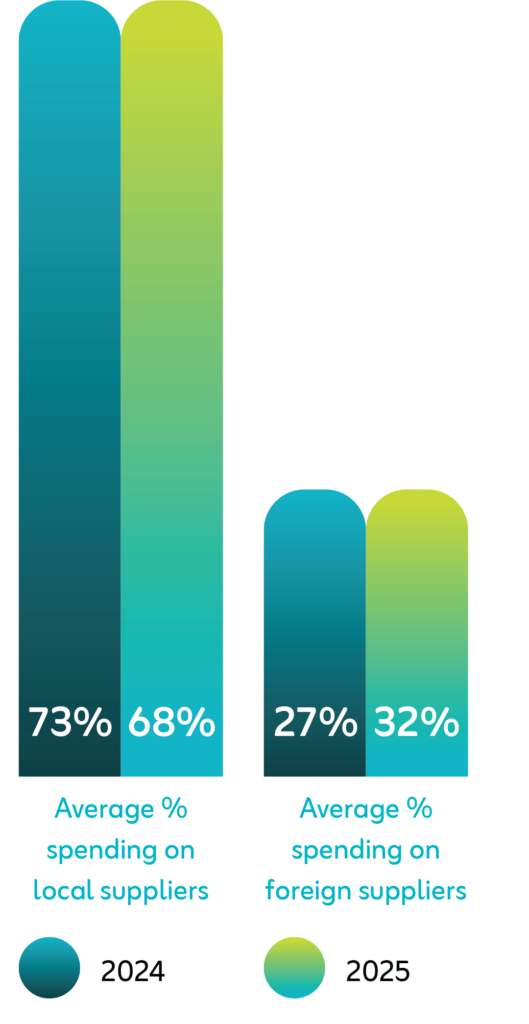
In 2025, Zain continued to track its annual spending on local versus foreign suppliers to assess its contribution to local economies. Compared to 2024, the company decreased its expenditure with local suppliers across the following markets: Iraq, Jordan, and South Sudan. However, Zain remains committed to strengthening local supply chains and enhancing supplier resilience.
2025 Procurement Spending Per Operation
Operation |
% Spending on Local Suppliers |
% Spending on Foreign Suppliers |
|---|---|---|
| Bahrain | 51% | 49% |
| Iraq | 36% | 64% |
| Jordan | 63% | 37% |
| Kuwait | 54% | 46% |
| Saudi Arabia | 96% | 4% |
| Sudan* | 90% | 10% |
| South Sudan | 86% | 14% |
| Total | 68% | 32% |
The graph below illustrates Zain Group’s procurement spending for local vs. foreign suppliers for 2025 as compared to 2024.
Data Privacy
Target for 2025
Educate marginalized communities by creating a data privacy and protection training program by 2025
Zain’s Response
Throughout the year, each of Zain’s operations finalized its plan on data privacy programs and identified the target segment. Sudan could not finalize its plan due to the ongoing civil unrest in the country.
Operation
Bahrain
Target Segment
Elderly Community
Progression in 2025
Zain Bahrain, in collaboration with its fintech arm Bede, hosted a financial literacy session for members of the Al Hekma Retired Society. The session introduced participants to the concept of micro-loans and guided them on managing personal finances through digital platforms. A total of 80 retirees attended the session, which aimed to strengthen their understanding of safe digital financial practices and promote financial inclusion among the elderly community.
Operation
Iraq
Target Segment
Students
Progression in 2025
In 2025, Zain Iraq hosted a series of data privacy awareness sessions targeting Al Nahrain university students, reaching a total of 335 participants. Topics included:
- How to protect personal information online
- Understanding data protection regulations
- Risks associated with data breaches
- Practical steps to secure their digital presence and maintain confidentiality
Operation
Jordan
Target Segment
Refugee Youth
Progression in 2025
In 2025, Zain Jordan continued its partnership with Al-Amaal Center through the T-Talk Initiative at the Jerash (Gaza) Refugee Camp, empowering refugee youth through digital and cultural exchange. Using Zain’s high-speed internet, participants engaged in live virtual dialogues with university students in the U.S., Canada, and Europe, enhancing English fluency, digital literacy skills such as responsible digital engagement, digital communication and cross-cultural understanding. The program delivered 300 interactive sessions, training 27 youth (23 females, 4 males) and reaching 4,222 beneficiaries from a camp population of 33,679 residents. Zain’s internet support enabled continuous online learning that strengthened participants’ digital literacy and enhanced their employability.
Operation
Kuwait
Target Segment
Humble Expat Workers
Progression in 2025
In 2025, Zain Kuwait expanded its data privacy awareness program through three sessions two for security staff and one for cleaning and hospitality staff to strengthen digital inclusion among third-party personnel. The sessions featured translated materials, task-specific content, and local cybersecurity insights, with participants receiving certificates of completion. A total of 94 participants attended and engaged in these sessions, 94% reported greater confidence in protecting their data, and 85% expressed interest in future sessions.
Inclusion
Under the Inclusion pillar of its Corporate Sustainability strategy, Zain is committed to bridging the digital divide between vulnerable segments such as the elderly, people with disabilities, women, and children. Across the Middle East and North Africa (MENA) region, digital inclusion continues to face challenges related to unequal access to connectivity, affordability barriers, limited digital literacy, and a gender gap in technology adoption, with women and marginalized groups often under-represented in the digital economy.
Elderly community
People with disabilities
Women in technology
Elderly Community
Target for 2025
Address 260,000 elderly people across Zain’s footprint by 2025 through tailored products, services, marketing campaigns, and benefits.
The elderly population across the MENA region is growing rapidly, with some countries projected to have over 30% of their population aged 60 and above by 2050, highlighting the need to enhance digital accessibility, literacy, and safety for older adults. Many people from the elderly community continue to face challenges such as limited access to technology, low confidence in using digital tools, and vulnerability to online scams and misinformation, restricting their ability to fully benefit from digital services and maintain social connections.
According to Morgan Stanley’s report “Cyber Security for Seniors: A Guide for Loved Ones”, while seniors are increasingly engaging with online platforms, limited awareness of cybersecurity practices leaves them exposed to digital threats.
Recognizing these challenges, Zain continues to focus on digital inclusion for the elderly, providing the tools, training, and awareness necessary to help them navigate the digital world safely and confidently. Since 2022, four out of seven Zain operations have launched initiatives aimed at empowering the elderly through digital literacy, online safety, and locally tailored community sessions.
To date, Zain has reached a total of 218,233 elderly individuals through its initiatives:
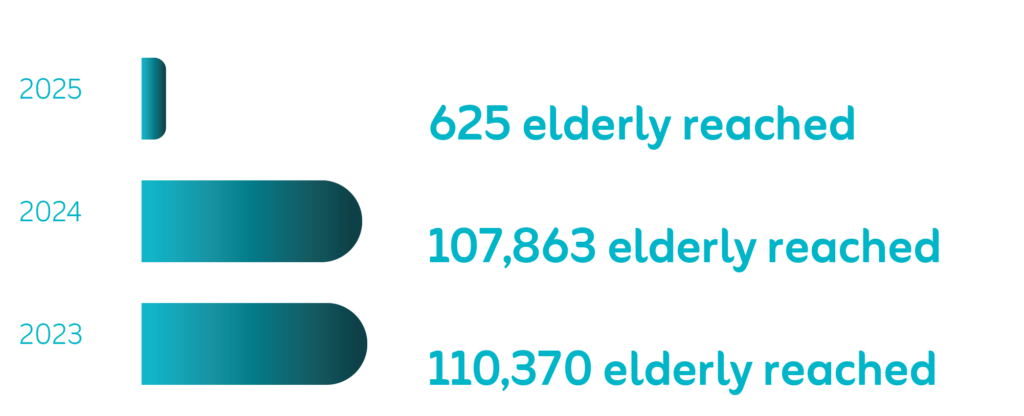
Remaining to target: 41,767 elderly to be reached to achieve the five-year goal of 260,000
The following highlights the initiatives conducted throughout the year:
Zain Bahrain: In 2025, Bede, Zain Bahrain’s Fintech arm expanded its outreach to elderly communities through a partnership with Al-Hekma Society. The collaboration enabled direct engagement with retirees and strengthened service accessibility. A total of 80 seniors participated, helping advance digital and financial inclusion by improving the ease, safety, and usability of essential services.
Zain Iraq: Zain Iraq hosted 30 older adults at its headquarters for a hands-on session on mobile and social media applications to help them stay connected with their families. The visit also included 42 orphaned children and concluded with a group lunch that encouraged positive community interaction across generations. In parallel, and in recognition of World Elder Abuse Awareness Day, Zain Iraq launched a social media campaign highlighting the challenges faced by older adults. The campaign reached over 1.3 million users, raising public awareness and strengthening understanding of their needs.
Zain Kuwait: In 2025, Zain Kuwait conducted cybersecurity awareness sessions for 15 participants, all of whom were parents of Zain employees, as part of the ‘You Are the Blessing’ initiative. The event also featured a dedicated health and wellness talk delivered by a medical expert, providing participants with valuable insights to support their overall wellbeing.
Zain South Sudan: The program delivered practical digital literacy training to 140 elderly participants (60 women and 80 men) in remote villages, covering basic mobile functions, internet use, and mobile money applications to help them stay connected and access essential services. To improve digital access, 120 solar power banks were procured for distribution. The engagement also increased awareness of Zain’s products and services, contributing to stronger customer loyalty and additional sales during community outreach activities.
Additionally, 500 elderly individuals (300 women and 200 men) were registered for the upcoming distribution of solar power solutions aimed at addressing power outages in Protection of Civilian camps and remote villages. This initiative will further enhance their ability to charge mobile devices and access essential digital services.

People with disabilities
Target for 2025
Launch core data bundles and packages in 2023 for people with disabilities
Based on a report published by PwC titled: The State of Digital Inclusion in the MENA Region, approximately 15% of the MENA region’s population is disabled. As the world continues to move towards fully digital economies, it is vital to ensure such segments are not left behind. The GSMA presents mobile operators with a framework that aims to provide a basis for increasing digital inclusion among people with disabilities:
- Understand the context and gather needed data
- Integrating disability inclusion in relevant policies
- Working cross functionally with other entities using a multi stakeholder approach
- Addressing the barriers
Based on the framework highlighted above, Zain ensures that it holistically assesses the challenges and needs of this segment and addresses each point. Targeting this demographic in a meaningful way generates value for the company by meeting regulatory requirements such as in Kuwait and KSA, in which the company must ensure that it provides a core bundle/service for this segment. Providing assistive technologies also boosts innovative approaches to providing products and services to an untapped market.
The table below highlights each market’s progress in providing core services to the disabled community:
Operation
Bahrain
Bundles Yes or No
Yes
Data Services for PwDs
In collaboration with Primary Health Care and the Bahrain Deaf Society, Zain Bahrain maintained its commitment to Natawasal, the pioneering health video call center specifically designed for the deaf community in Bahrain. Originally launched in 2023, this initiative was developed to address the unique healthcare needs of deaf and hard-of-hearing individuals, ensuring they receive accurate medical diagnoses and appropriate treatment from their healthcare providers. The video call center connects 27 health centers across the Kingdom, providing vital communication support that bridges the gap between healthcare professionals and patients with hearing impairments.
Operation
Iraq
Bundles Yes or No
No
Data Services for PwDs
Due to a lack of data and country-wide statistics, Zain Iraq did not launch any bundles specified for persons with disabilities (PwDs). To circumvent this challenge, the company provided other services that support this community in accessing its digital products and services. This year, Zain Iraq provided support to 94 students with visual impairments by offering them a monthly 10GB data bundle. This initiative was designed to facilitate their access to educational lectures on YouTube and Zoom, aiding them in their preparation for school exams.
Additionally, a total of 36 participants completed the Harvard CS50p program, gaining foundational skills in Python, HTML, CSS, and Flask. Delivered in partnership with Computiq and in collaboration with the Ministry of Labor and Social Affairs, the initiative aims to equip PwDs with recognized digital qualifications that enhance their employment opportunities in the technology sector.
Operation
Jordan
Bundles Yes or No
Yes
Data Services for PwDs
In 2025, Zain Jordan continued its Basma+ Line, providing 317 customers with hearing impairments access to discounted communication services and dedicated customer support, helping reduce communication barriers for vulnerable segments. To further enhance inclusivity, a partnership with Royal Jordanian Airlines introduced tablets across seven airport counters to support passengers with hearing impairments.
Operation
KSA
Bundles Yes or No
Yes
Data Services for PwDs
Zain KSA continues to promote its core bundle for PwDs, Lifetime, which provides 50% discount. It counted 840 subscribers in 2025.
Operation
Sudan
Bundles Yes or No
No
Data Services for PwDs
Zain Sudan did not launch any bundles specified for PwDs. It expanded its PWD inclusion initiative by creating a verified database of over 23,000 registered PWD mobile numbers, collected through disability unions, online forms, shop registrations, and WhatsApp support. The database enabled targeted communication and tailored offers, including 100 free call units provided to all registered individuals on the International Day of Sign Languages. Partnerships with disability unions strengthened community trust and improved accessibility through trained staff and adapted registration channels.
Target for 2025
Embed the GSMA's "Principles for Driving the Digital Inclusion of Persons with Disabilities" by 2025
Since 2020, Zain continues to be signatory of the GSMA’s Principles for Driving the Digital Inclusion of Persons with Disabilities. Zain recognizes the importance of digital inclusion and is committed to integrating it throughout its value chain. As a signatory to the principles, Zain is committed to the following:
- Embrace disability inclusion at every level of the organization
- Understand how to reach and better serve persons with disabilities
- Deliver inclusive products and services that meet the diverse requirements of persons with disabilities
The company addresses the principles through following actions:
Principle
Principle 1: Embrace disability inclusion at every level of the organization
Action taken
The company established an internal program disability inclusion initiative, WE ABLE, launched in 2019. The program aims at embedding disability inclusive practices in the company by 2025. More information on the initiative can be found on page 92.
Principle
Principle 2: Understand how to reach and better serve persons with disabilities
Action taken
Under the WE ABLE initiative, the company continued a Group-wide social media campaign “Be My Eyes.”
The aim of the campaign was to immerse the audience in the daily experiences of a blind person as one of Zain’s people with disabilities target segment.
The campaign raised awareness and ultimately drove meaningful changes in behavior and processes that affect people with visual impairments. By providing a first-person perspective on the challenges and triumphs of navigating a world designed for the sighted, the campaign aimed to challenge preconceived notions and encourage more inclusive practices across various sectors.
More details on this campaign can be found on Page 92.
Principle
Principle 3: Deliver inclusive products and services that meet the diverse requirements of persons with disabilities
Action taken
Given that the company operates in eight distinct markets, each with unique challenges and requirements related to PwDs, each operation developed a tailored bundle to address the specific needs of its respective market.
More information on the PwD bundles that Zain offers to its customers can be found on page 113.
Women in Technology
Target for 2025
To mentor 200 female university students pursuing STEM disciplines in each operating market.
Zain established the Women in Tech (WiT) program in 2020 to address the persistent under-representation of women in STEM (Science, Technology, Engineering, and Mathematics) fields across the MENA region. UNESCO continues to highlight that women make up only 40% of the STEM workforce across the region, underscoring the need for sustained, scalable programs that provide mentorship, exposure, and support for women to enter and thrive in STEM careers.
The Global Gender Gap Report 2025 indicates that this statistic now stands at 68.8%, reflecting only marginal progress (+0.3 percentage points) compared to 2024. The report highlights improved performance in Political Empowerment and Economic Participation & Opportunity, yet significant disparities remain in the global labor market, including STEM fields.
The report provides STEM graduate ratios for only three of Zain’s nine markets of presence, highlighting the need for improved data transparency. Strengthening insights across all operating markets will support more targeted interventions and ensure effective program delivery.
STEM Graduate Gender Ratios in Zain Markets
Country |
% Female STEM Graduates |
% Male STEM Graduates |
|---|---|---|
| Kuwait | Not available | Not available |
| Bahrain | 41% | 59% |
| Iraq | Not available | Not available |
| Jordan | Not available | Not available |
| Oman | Not available | Not available |
| Saudi Arabia | 37% | 63% |
| Sudan | Not available | Not available |
| South Sudan | Not available | Not available |
| UAE | 41% | 59% |
Women in Tech (WiT):
In 2025, Zain continued to expand and strengthen its flagship WiT program, building on the foundations established in previous years. The program’s core objective remains to introduce recent female graduates to diverse STEM-related career pathways by pairing participants with experienced mentors across Zain’s operations, providing hands-on guidance, exposure, and professional development.
This year, Zain took meaningful steps toward embedding inclusivity more deeply into the program by piloting the integration of PWDs into selected WiT tracks. This pilot aims to ensure that emerging talents with disabilities can access equal opportunities in the technology sector, with tailored support and mentorship structures being tested and refined.
To better understand how the program can further evolve, Zain also conducted a comprehensive assessment of its digital platforms, identifying opportunities to enhance accessibility and leverage the company’s online presence to expand program reach and improve the experience for both trainees and mentors.
Throughout 2025, the company set higher participation targets across all operations in Kuwait, Bahrain, Iraq, Jordan, and KSA. As a result, the fifth round of WiT saw increased enrollment, with each market tailoring its implementation timeline to accommodate the growing number of trainees while maintaining the program’s high standards of delivery and impact.
Operation
Kuwait
Context
In 2025, Zain Kuwait significantly scaled the Women in Tech program, with 550+ participants completing the initiative, including six women with disabilities. This inclusion component was introduced to strengthen equitable access and ensure the program serves women with diverse needs. Through MoUs with institutions such as Box Hill College, GUST, and Kuwait University, participation is expected to increase further by year-end as the program becomes integrated into academic offerings.
The 2025 program focused on key digital transformation areas including Access Management, Cybersecurity, Cloud, Data, and AI, and was delivered by Zain employees with STEM expertise, supported by structured mentorship. Early outcomes indicate strong impact: five participants achieved notable career advancements, transitions into technical studies, and internal promotions.
Achievement since 2022
- 2022: -
- 2023: -
- 2024: 7
- 2025: 550
Operation
Bahrain
Context
In 2025, Zain Bahrain conducted a supplementary with the Women in Technology Drive and Youth Connect Arabia to bring together young women from universities to explore opportunities in the tech and AI sector through a gamified learning session. The initiative emphasized inclusion, innovation, and future-ready skills, with participants engaging in interactive activities and receiving 40 certificates of participation in alignment with Google Developer Groups (GDG), recognizing their learning and growth in the tech space.
Achievement since 2022
- 2022: -
- 2023: -
- 2024: -
- 2025: -
Operation
Iraq
Context
In 2025, Zain Iraq delivered an expanded edition of the WiT program, reaching 318 attendees across Baghdad, Basra, and Erbil. Participants engaged in 171 sessions delivered across nine specialized tracks covering Web Development, Networking Essentials, Data Analysis, Cybersecurity, and Mobile App Development.
The program was delivered in partnership with leading local tech and training organizations, ensuring strong technical quality and accessible learning.
The expanded model strengthened the program’s ability to scale nationwide and further positioned Zain Iraq as a key contributor to women’s digital upskilling.
Achievement since 2022
- 2022: 115
- 2023: 136
- 2024: 160
- 2025: 318
Operation
Jordan
Context
Zain Jordan successfully streamlined the WiT program, the program was executed in two distinct phases to achieve the 2024 target. In the first phase, mentees participated, gaining valuable insights and skills through a series of structured sessions. The second phase followed, accommodating additional mentees and comprising six informative sessions.
Achievement since 2022
- 2022: 100
- 2023: 122
- 2024: 154
- 2025: 200
Operation
KSA
Context
The Communications, Space and Technology Commission and Zain collaborated in the WiT program for the third year. The program commenced in December 2024 and was tailored for 150 women and completed in 2025.
Achievement since 2022
- 2022: 100
- 2023: 150
- 2024: 150
Operation
Sudan
Context
Zain Sudan continued the WiT program in an online format, adapting to the current situation on the ground. The initiative aims to empower women by providing them with advanced skills in programming, artificial intelligence, and innovation. The program followed a hybrid model, combining pre-recorded sessions with live, interactive ones to maximize accessibility and engagement for participants.
Achievement since 2022
- 2022: 100
- 2023: 150
- 2024: 150
- 2025: 55
Women in Tech 2022 – 2025
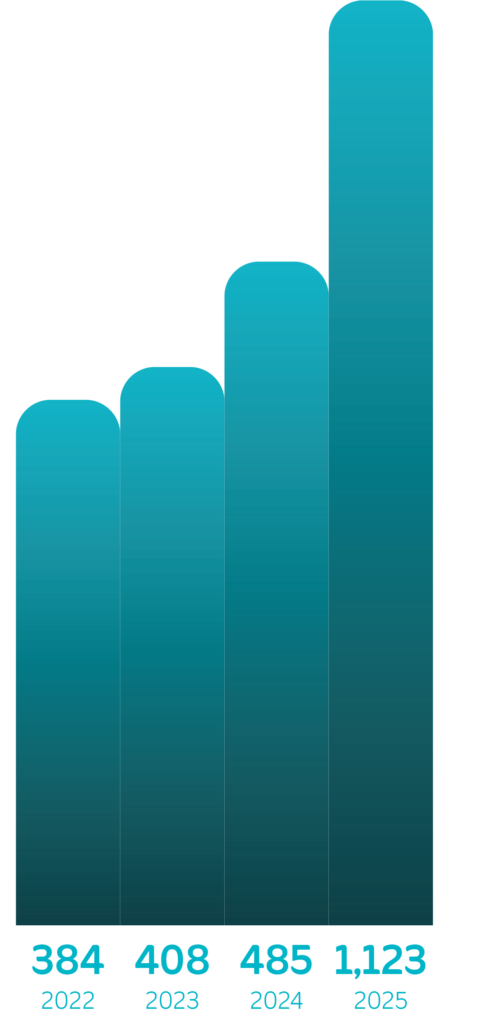
Zain South Sudan and the Whitaker Peace and Development Initiative
Through its partnership with the Whitaker Peace & Development Initiative (WPDI), Zain South Sudan advanced efforts to strengthen peace, resilience, and socio-economic development in conflict-affected communities. A total of 629 women from multiple regions and ages received training in computer applications including Microsoft Word, Excel, PowerPoint, and internet use delivered through Zain’s ICT data programs at community learning centers in Juba. The training aims to enhance digital skills and support women in expanding their business and livelihood opportunities.
Number of people trained in ICT SKILLS
Centre |
Female |
|---|---|
| Torit | 207 |
| Juba | 158 |
| Yambio | 234 |
| Maridi | 12 |
| Nimule | 18 |
| Total | 629 |
Generation Youth
Zain recognizes the growing importance of youth inclusion in shaping the region’s social and economic trajectory, particularly as the Middle East and Africa (MEA) region continues to face some of the highest youth unemployment rates globally, alongside widening digital skills gaps. With one of the world’s youngest and fastest-growing populations, these challenges intersect strongly with the rapid shift toward digital economies, where meaningful participation increasingly relies on connectivity, digital literacy, and safe online engagement.
As young people increasingly depend on digital platforms for learning, employment pathways, and social interaction, the quality, safety, and accessibility of these online environments have become central to their wellbeing. Safeguarding children’s rights, especially their rights to protection, participation, and access to information, forms an integral part of Zain’s approach to supporting youth. This commitment reflects the company’s responsibility to ensure children and young people can navigate the online world confidently, safely, and without exposure to harm. In 2025, this commitment was recognized once again, with Zain ranked the regional leader in the Global Child Forum benchmark for the third year in a row, earning an 8.5/10 score and full marks in Governance & Collaboration category.
Guided by global developments in youth empowerment, digital rights, and child protection, Zain continued to embed youth- and child-focused considerations into its broader Sustainability Strategy. This included reinforcing responsible digital use, strengthening data privacy safeguards, and ensuring that young users have access to environments that are safe, trusted, and conducive to growth. Zain also maintains a strong focus on enhancing digital literacy, promoting equitable access to technology, and enabling young people to develop the skills required to participate meaningfully in the future digital economy.
The intersection of youth unemployment, digital skills readiness, online safety, and children’s rights highlights the need for a holistic approach that expands opportunity while protecting wellbeing. Through its strategic priorities and sustainability commitments, Zain remains dedicated to empowering young people across the region to be active, resilient contributors to digital transformation and long-term sustainable development.
Children’s Rights
Zain is committed to safeguarding children’s rights throughout its business practices, its operations, value chain, and digital ecosystem. This commitment is grounded in international standards and reinforced by strong governance. Zain’s Board of Directors has oversight to ensure children’s rights and digital safety are promoted, emphasizing secure online environments and responsible access for young users, while ensuring that child protection is integrated into the company’s broader commitment to ethical practices and sustainable digital innovation. As digital platforms play an increasingly central role in how young people learn, communicate, and access opportunities, Zain continued to strengthen its efforts to ensure their safety, privacy, and wellbeing.
Zain upholds strict safeguards against child labor across its operations and supply chain. The company prohibits the employment of anyone below the legal working age, in accordance with the International Labor Organization’s Minimum Age Convention and relevant national legislation. In 2025, there were no reported cases of child labor across Zain’s value chain. The process of identifying such is based on a rigorous due diligence procedure that includes supplier self-assessment questionnaires, physical audits with focused age-verification checks embedded into the practices. These controls are implemented across Zain’s responsible supply chain management and Environmental and Social Management Plan (ESMP) requirements to ensure that operational activities such as tower construction, site preparation, field services, and base station deployment are conducted without exposing children to harm.
To reinforce accountability, Zain provides accessible grievance and reporting mechanisms for employees, suppliers, and external stakeholders. Concerns related to human and children’s rights can be raised through line managers, Human Resources, the Compliance Office, or under the Whistleblower Policy. These channels ensure that potential issues are addressed transparently and in accordance with established investigation and remediation procedures.
Zain also maintains progressive family-friendly workplace policies recognizing the importance of early childhood development and parental support. The company offers four months of maternity leave with flexible working arrangements until a child is four months old and an optional two-month remote baby-bonding period, and five days of paid paternity leave. These policies reinforce Zain’s broader commitment to children and families.
Protecting children in the digital environment remains a central pillar of Zain’s approach. The company’s Data Protection Policy reiterates its stance on not deliberately processing the personal data of children below the legal age unless verifiable guardian consent is obtained. Zain also strengthened privacy protections, integrated digital rights considerations, and promoted safe online engagement for young users across its footprint.
Zain Group conducted a child’s rights gap analysis using UNICEF’s Child Rights Impact Self-Assessment Tool for Mobile Operators (MO-CRIA). The assessment focused on the Procurement, and Products and Sales alongside the indicators under Module 4 and 5 of the tool, enabling Zain to benchmark its existing supply chain and commercial practices against international best practices and identify potential gaps related to child rights.
Through the MO-CRIA Module 4 (Products and Sales) category, Zain engaged with commercial teams and conducted groupwide upheld ethical standards in its marketing and communications. Guided by the Responsible Marketing and Communications Standard and aligned with international frameworks such as UNICEF’s MO-CRIA, the company ensured that all content is age-appropriate, accurate, inclusive, and free from manipulative or harmful messaging. Parental or guardian consent is obtained where required, ensuring strong data and privacy safeguards for minors.
This year, Zain continued to review its current supply chain frameworks and procurement controls to evaluate alignment with the identified requirements. Any gaps highlighted through the MO-CRIA assessment are currently being addressed through targeted enhancements to the Supplier Code of Conduct, related to child protection, labor standards, and human rights across the supplier base. This approach supports Zain Group’s ongoing efforts to strengthen responsible procurement, strengthen children’s rights, and drive continuous improvement across its value chain.
In support of broader community protection systems, Zain also maintained a multi-year partnership with Child Helpline International (CHI). Through this collaboration, the company helps strengthen national child helplines and expands access to trusted, confidential support services for children and young people in its markets. This partnership complements Zain’s internal safeguards by reinforcing external protection mechanisms and promoting awareness of digital risks and child wellbeing.
Together, these efforts reflect Zain’s comprehensive, end-to-end approach to safeguarding children’s rights, spanning governance, supply chain integrity, digital safety, ethical communication, strong internal policies, and community partnerships. By embedding these principles across its operations, Zain continued to uphold the highest standards of responsibility toward children and young people throughout its footprint.
Child Online Safety:
Partnership with Child Helpline International:
Zain continues its Memorandum of Understanding (MoU) with Child Helpline International (CHI), supporting child helplines across its operations. In its third year, the partnership has focused on strengthening child protection and online safety through the mobilization and facilitation of child helpline services, alongside awareness roadshows and engagement activities conducted with children, teenagers, educators, parents, and caregivers. Through this multi-stakeholder approach, Zain gathers insights through surveys and focus groups with children and their representatives to better understand online safety concerns, digital wellbeing needs, and emerging risks, helping inform and strengthen its child online safety initiatives.
Zain Kuwait:
Kuwait National Child Protection Program (KNCPP) - 147
In 2025, Zain Kuwait continued in its efforts to sustain the 147 Child Helpline in partnership with the Kuwait National Child Protection Program (KNCPP), through targeted initiatives and awareness campaigns., including creating an animated video and to raise awareness and reiterate public trust in child protection services.
In addition, school roadshows were conducted, engaging in over 50 participants, with counselors, teachers, and education professionals from over 6 schools, further strengthening availability of child support services.
As a main sponsor, Zain continued to play a central role in supporting the awareness of the helpline throughout the year. In addition, further efforts were made to strengthen child protection services, implementing a series of awareness campaigns and engagement initiatives aimed at promoting safe digital practices, child counselling guidance, and strengthening overall awareness of the service. The helpline handled a total of 5,212 calls during the year, reflecting continued public reliance on the service. Due to the continued efforts mainly from Zain, alongside other stakeholders, the helpline received 1,835 calls, with a 64% year-on-year increase and a 34% increase compared to Q3.
Zain Jordan:
Jordan River Foundation - 110
In 2025 Zain Jordan expanded its nationwide awareness efforts to promote the Child Helpline and encourage access to support services. The company launched an awareness campaign through SMS broadcast targeting 100,000 individuals. Zain Jordan also utilized traditional media channels such as radio interviews as well as television interviews to reach a wider audience.
Moreover, Zain Jordan also conducted a social media campaign, that included four short videos highlighting the key services provided by the CHI 110 hotline, aiming to increase visibility, engagement, and public awareness of the available support services, which reached over 127,000 views.
As a result of these combined awareness efforts, the helpline recorded a significant increase in utilization. Total calls reached 886 in 2025, compared to 552 in 2024, representing a 60% year-on-year increase. Following the SMS campaign, calls increased from 3,496 to 5,049, reflecting heightened awareness and accessibility of the service.
Zain KSA:
Saudi Arabia National Family and Safety Program Helpline - 11611
In 2025, Zain Saudi Arabia continued to support child protection services by raising awareness of online safety and children’s rights through both digital and on ground activities. Social media campaigns resulted in 65,194 impressions, and an on-ground activation of the helpline was delivered to 443 children through 10 awareness sessions, addressing issues such as bullying and children’s rights.
Digital Literacy
Target
To equip 471,000 children and youth with digital literacy skills by 2025
In 2025, digital transformation across the region continues to expand rapidly, unlocking new pathways for learning, economic participation, and social inclusion. Yet despite this growth, significant gaps in digital literacy persist, especially amongst youth and vulnerable groups. With the growing reliance on digital platforms for education, work, and daily activities, online risks are becoming more prevalent. Bridging these gaps is now more critical than ever, to ensure all individuals participate confidently in the digital ecosystem, protect themselves online, and benefit from emerging digital opportunities.
Zain Kuwait:
Zain Kuwait continued to advance youth digital empowerment through its support of Academy X and Kuwait Codes, two flagship programs delivered in partnership with CODED. Kuwait Codes introduces high school students to programming and emerging technologies through specialized technical tracks, while Academy X, a non-profit initiative, focuses on equipping young women with essential digital, design, and entrepreneurship skills. Across both programs, participants engaged in practical learning on topics such as cybersecurity, Python with AI, mobile and web development, product design, and business innovation. Together, these initiatives fostered a strong pipeline of digital talent, culminating in the graduation of 1,288 students in 2025, reinforcing Zain’s commitment to building future-ready capabilities among Kuwait’s youth.
Zain Iraq:
In 2025, Zain Iraq strengthened youth digital inclusion and online safety through a series of high-impact initiatives. The company recorded 99,750 new active users on the Zain Kids platform during Q1 alone, significantly expanding access to digital literacy content for children and families. In parallel, the company supported future workforce readiness by enabling 200 youth to apply for CISCO digital skills courses through the Raqami platform, further reinforcing Zain Iraq’s commitment to empowering young people with essential digital competencies. Zain Iraq also conducted bullying and cyberbullying awareness sessions for primary school students in Basra and Baghdad on a quarterly basis. The sessions aimed to educate students on recognizing harmful behaviors, promoting respectful communication, and encouraging safe online practices.
Q1 |
Q2 |
Q3 |
Q4 |
Total |
|---|---|---|---|---|
|
230 |
80 students |
100 students |
260 students |
670 students |
Zain South Sudan:
In partnership with the Whitaker Peace and Development Initiative, Zain South Sudan advanced digital inclusion by supporting large-scale ICT capacity-building youth across five states. A total of 1,725 participants (629 women and 1,096 men) were trained in core computer applications including Microsoft Word, Excel, PowerPoint, and internet navigation through Community Learning Centers in Juba, Torit, Yambio, Maridi, and Nimule.
As part of Zain South Sudan’s partnership with the Whitaker Peace and Development Initiative (WPDI), a series of trainings on online privacy and cybersecurity were delivered to school children at the WPDI Community Learning Center in Juba. The initiative aimed to raise awareness towards the importance of safe digital practices among children, equipping with them with the knowledge and skills to navigate the online environment security. The sessions covered key topics including phishing and social engineering, password protection and authentication, public Wi-Fi risks, social media safety, cyber hygiene, and responsible internet use. Through this initiative, a total of 487 children were given training, strengthening their awareness on online privacy and safer digital behavior.
Back to School Programs:
Zain Sudan: In response to the destruction of schools, Zain Sudan launched its flagship initiative, Back-to-School, offering support in basic education in six areas affected by the conflict: Khartoum, Sennar, Al Jazirah, White Nile, Al Gadarif, and North Kordofan. The project provided 1,090 school benches and 3,004 sets of school uniforms and scholastic materials. Supporting over 5,000 students (2,610 girls, 2,390 boys).
Zain Iraq: As part of its Back-to-School campaign, Zain Iraq hosted a five-day stationery bazaar at its headquarters, encouraging employees to purchase bags and stationery packages for orphaned children. Through this effort, 550 backpacks and stationery sets were distributed to students across Baghdad, Erbil, Basra, Anbar, and Samawah, supporting their return to school with essential supplies.
Zain South Sudan: Zain South Sudan promoted girls’ education through a large-scale Back-to-School campaign implemented in Central, Eastern, and Western Equatoria states under the theme, “Educate a Girl, Empower a Nation.” The campaign reached 3,711 community members through 25 outreach sessions in schools and villages, addressing early marriage, menstrual hygiene, poverty, and school drop-out while promoting the long-term value of girls’ education.
Youth Unemployment
Target
1. Reach unemployed youth through training, skills development, workshops, and mentorship opportunities
2. Support the startup ecosystem and help create pathways for employment.
Youth unemployment remains one of the region’s most pressing socio-economic challenges, particularly as instability, conflict, and shifting market demands continue to affect young people’s access to opportunities. With the region still experiencing some of the highest youth unemployment rates globally, Zain recognizes the need for integrated strategies that advance education, digital and technical skills, and employment readiness. Addressing youth unemployment not only responds to urgent economic concerns but also strengthens long-term social resilience, ensuring young people are empowered to participate in and contribute to sustainable economic growth.
Zain Kuwait: Developing Youth Skills
Zain Kuwait continued expanding youth empowerment through flagship development programs. The sixth edition of the Zain Summer Program offered hands-on workplace training and professional development, generating measurable business value with 1,711 sales transactions totaling 16,966 KWD, and attracting 132% more applications. The 10th edition of the KON Program, delivered in partnership with Babson College, guided 45 teenagers through five weeks of entrepreneurship workshops, mentoring, and final business pitches. Additionally, the 20th edition of INJAZ supported 200 students with programs in entrepreneurship, work readiness, and financial literacy, strengthening career preparedness and leadership skills for the next generation.
Zain Sudan: Vocational Training
Amid ongoing instability and high youth unemployment, Zain Sudan delivered its vocational training program, aimed at equipping young Sudanese individuals with practical, market-relevant skills. Provided in collaboration with local partners, the program offered hands-on training in areas such as device repair, basic electronics, and other technical competencies aligned with current labor market needs. In 2025, the initiative further emphasized resilience and sustainable livelihoods, enabling participants to gain the confidence and capabilities needed to enter the workforce. To date, the program has supported more than 715 youth across Egypt and Sudan, preparing them with the competencies required to secure meaningful employment. The program offered practical, market-driven skills in areas such as solar energy, electronics, tailoring, food manufacturing, and carpentry. Training durations ranged from 10 days to nearly two months, with a strong emphasis on women’s empowerment and economic inclusion.
Zain Jordan: Mobile Maintenance Vocational Training
Since its launch in 2008, Zain’s Mobile, Gaming Devices, and Fiber Training Program provided certified vocational training that equips youth with practical skills in mobile maintenance, gaming console repairs, and fiber network installation. Operating across seven centers in six governorates, including one serving Palestinian refugees through a partnership with UNRWA, the program enabled participants to enter the job market or start their own businesses. In 2025, the initiative was strengthened by extending total training duration from three to six months, introducing specialized modules in gaming console maintenance, and securing official accreditation from the Skills Development Commission and the Vocational Training Corporation.
Zain South Sudan: Youth Empowerment
As part of ongoing efforts to strengthen youth employability, Zain launched its Youth Empowerment program under Zain South Sudan’s overarching partnership with the Whitaker Peace and Development Initiative. The program is a comprehensive CV and career development initiative that reached 487 young people across South Sudan, where 190 were females and 297 males. In Eastern Equatoria, 71 youths gained soft skills, CV and cover-letter writing training, and were introduced to online job platforms, with 24 producing professional resumes and 23 accessing digital job portals for the first time. In Central Equatoria, 116 participants received training in crafting compelling CVs and cover letters, interview preparation, and career guidance, reporting increased confidence entering the labor market. Meanwhile, 300 youths in Western Equatoria enhanced their capabilities in CV writing, interview readiness, and email account creation. Collectively, the initiative improved access to opportunities and strengthened job-market preparedness across the three states.